Island Sink Air Admittance Valve: Installation Guide
Start your island sink air admittance valve installation. Expert guide covers code compliance, step-by-step setup, and Tuuber product recommendations.
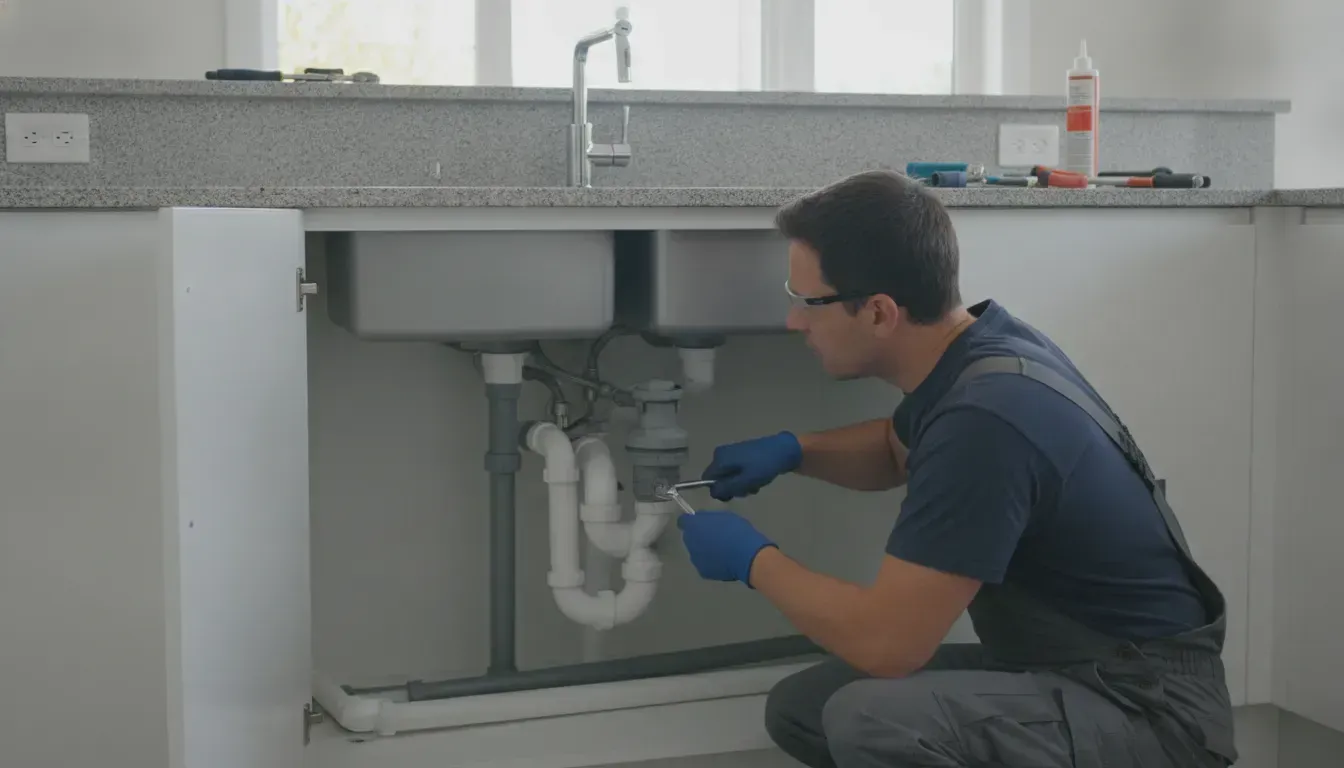
An island sink can drain perfectly even when there is no nearby wall for a conventional vent connection. But the venting still has to manage pressure changes in the drain system. Without a suitable solution, negative pressure can siphon water from the trap, contributing to odors, gurgling, or slow drainage.
Browse Tuuber Dual-Seal AAV Products→ to find the right valve for your island sink configuration.
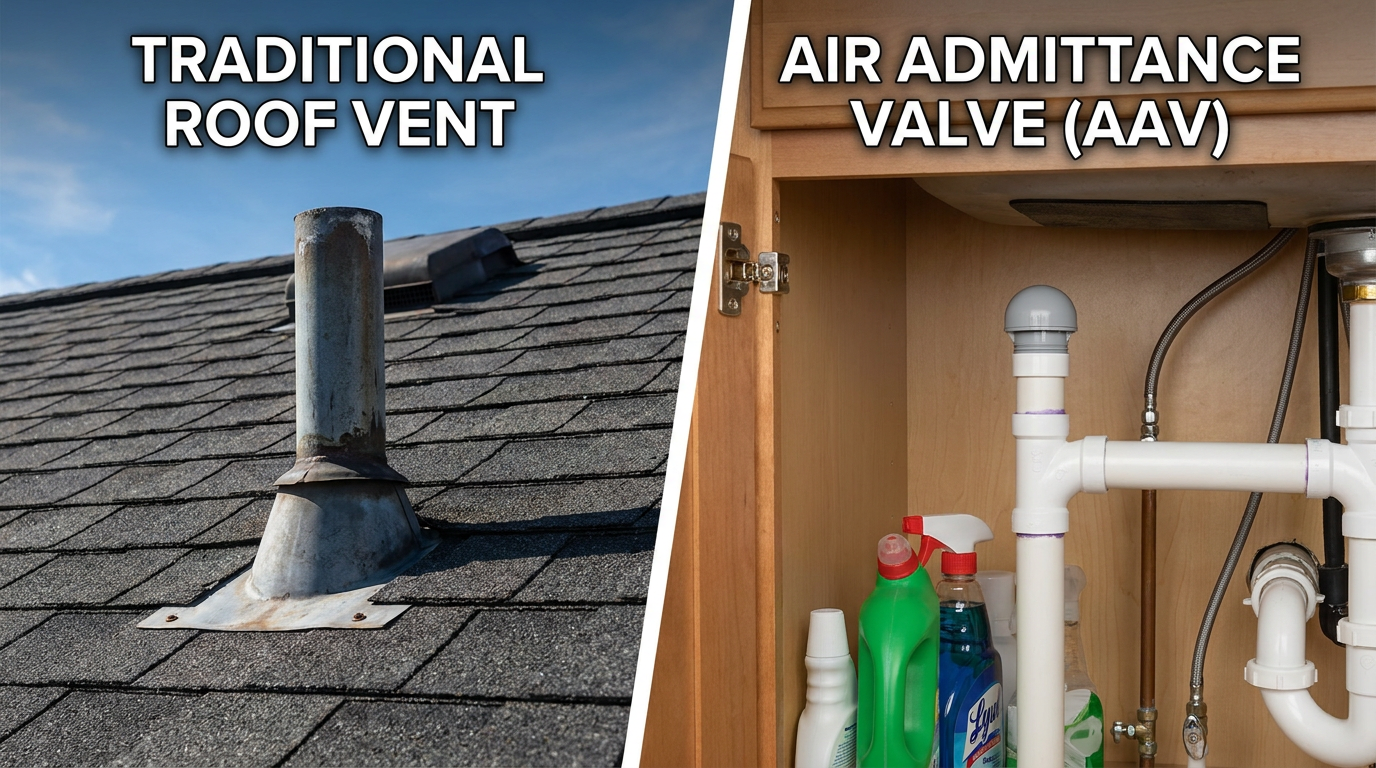
An island sink air admittance valve allows air into the drain system when negative pressure develops. Helping maintain the trap seal without extending a traditional vent through a wall. AAVs can be a practical alternative where wall venting is not feasible, but installation and local code requirements still matter.
The right approach depends on the sink's location, drain layout, available space, and the rules enforced by the local Authority Having Jurisdiction. Before choosing components or cutting into the cabinet. It helps to understand why island configurations make traditional venting more complicated and how the available venting paths address that challenge.
Why Island Sinks Are Difficult to Vent with Traditional Plumbing
A kitchen island creates a plumbing problem that a sink against a wall usually avoids: there is no nearby wall cavity through which to run a conventional vent pipe. The drain still needs a dependable path for air, but the vent must be routed through the floor, cabinetry, or another permitted configuration. The routing must not interfere with the island's structure or finished surfaces.
The traditional island loop requires careful routing
One established solution is an island fixture vent, often called a loop vent. The approach dates to the 1958 Uniform Plumbing Code and was later recognized in most model plumbing codes. Instead of rising through an adjacent wall, the vent rises as high as practical within the island, then returns downward and connects to the drainage system. That routing takes planning around the sink cabinet, countertop, disposer, and floor framing.
Code provisions can also require the trap vent for an island sink to extend as high as possible, at least to the drainboard height, before turning back down. This requirement is one reason an island installation cannot be treated like a simple under-sink drain connection. The exact configuration, cleanouts, pipe sizing, and testing requirements depend on the applicable plumbing code and the local Authority Having Jurisdiction.
Venting choices have changed as codes evolved
Other configurations, including a combination waste and vent arrangement, have also been used for island sinks. Fine Homebuilding notes that the combo vent was historically avoided when a food waste disposer was present because of an older restriction. That restriction was clarified in the 2018 edition of the International Residential Code, so installers should verify the current rules rather than rely on outdated trade advice.
When venting is undersized, incorrectly routed, or omitted, the drainage system can develop symptoms such as slow draining and gurgling. Those sounds indicate that air is struggling to move through the system, and poor venting can contribute to trap-water siphoning. A properly selected AAV approach can provide an alternative where wall venting is not feasible, without opening finished walls or undertaking unnecessarily destructive construction. Any island sink air admittance valve installation still needs to follow local code and manufacturer instructions.
Is an Air Admittance Valve Code-Legal for an Island Sink?
In many North American jurisdictions. Plumbing codes such as the International Plumbing Code (IPC) and International Residential Code (IRC) recognize air admittance valves (AAVs) as an alternative to conventional vent piping. That does not mean every installation is automatically approved. The valve, drain layout, access, placement, and testing must meet the code adopted where the work is performed, along with any local amendments.
For an island sink, this distinction matters. An AAV can solve the practical problem of venting a fixture located away from an exterior wall. But it must be installed as a code-compliant part of the complete drainage system. Confirm the applicable requirements with the local plumbing inspector or other Authority Having Jurisdiction (AHJ) before rough-in. Plumbing systems must be tested in accordance with the adopted code or the AHJ, and joints and connections must be gastight and watertight for the required test conditions. Review an example of code testing and material requirements before finalizing the installation.
How an AAV protects the island sink trap
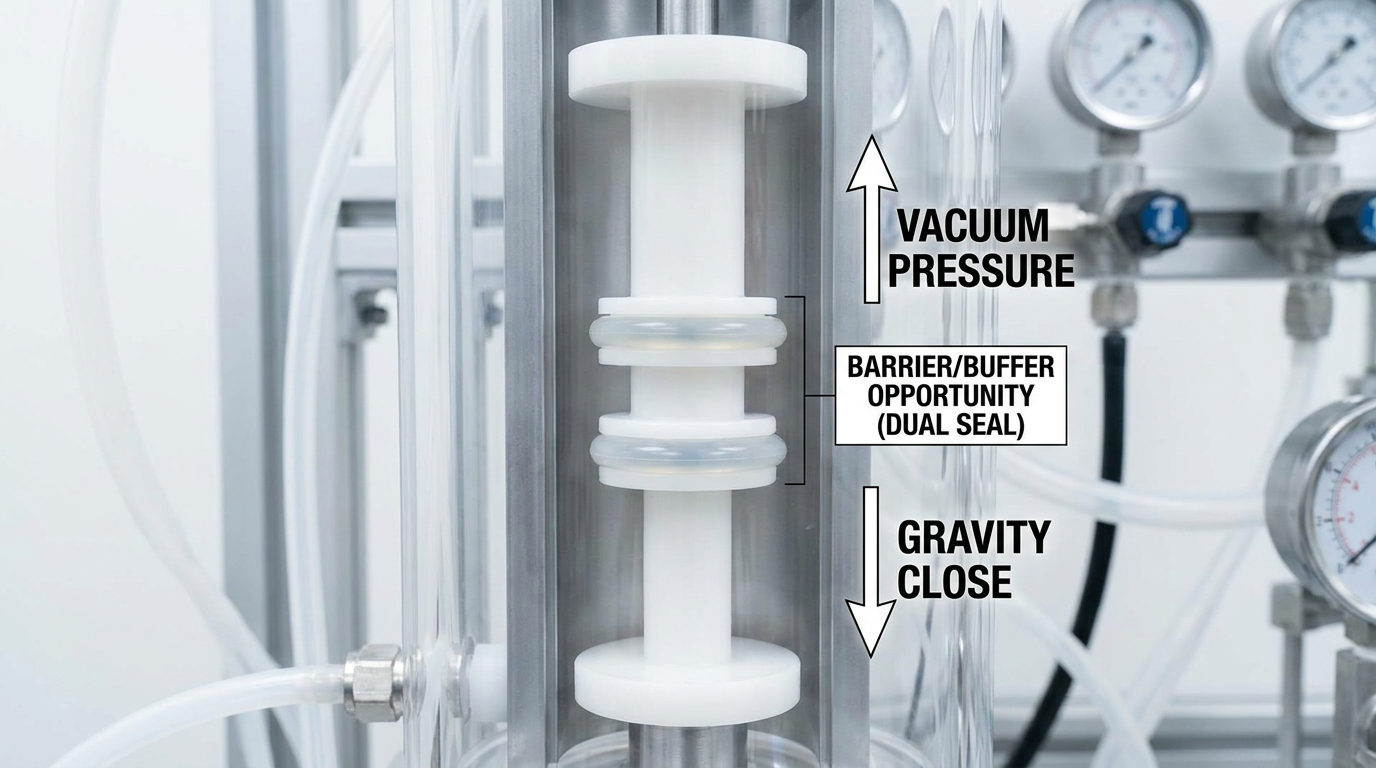
Drainage flow can create negative pressure in the pipe. An AAV is a one-way valve that opens when that pressure develops, admitting air into the drainage system. The incoming air helps maintain atmospheric pressure and prevents the trap seal from being siphoned out. Keeping water in the trap is essential because the seal helps block sewer gases and odors from entering the room. Once pressure equalizes, the valve closes rather than allowing air to escape through the vent opening. The EPA describes this negative-pressure and trap-seal function.
What compliance should you verify?
Choose an AAV assembly made from durable, dense, non-absorbent materials with smooth, impervious surfaces, as required for plumbing fixtures in the cited code provisions. Tuuber Valves products are designed to comply with ASSE 1050 and ASSE 1051 standards. See Tuuber's product and compliance information. The practical answer is yes: an AAV can legally address an island sink venting problem when the selected product and full installation follow the locally adopted code and pass the AHJ's review and testing.
How to Loop-Vent or AAV-Vent an Island Sink Under the Floor
An island sink needs a venting method that protects drainage performance without relying on a nearby wall. Proper venting helps prevent slow drains and gurgling, while maintaining the trap seal. The traditional approach is an island loop, a method first introduced in the Uniform Plumbing Code in 1958 and later recognized in most model plumbing codes. A second option is an air admittance valve installed above the trap, where local code and the Authority Having Jurisdiction allow it.
Island sink venting approachesConsiderationLoop ventAAV ventHow it worksContinuous waste-and-vent piping rises from the island drain, loops as high as practical under the counter, then returns through the floor to connect with the drainage system.An air admittance valve opens when negative pressure develops, admitting air to the drain system and helping prevent the trap seal from being siphoned out.When it fitsUseful when the project can accommodate a properly configured under-floor loop and the local plumbing rules require or favor a vent connection to the drainage system.Viable where wall venting is not feasible, including many island layouts where reaching a conventional vent would require opening finished floors, cabinets, or walls.Installation impactRequires careful routing, accessible cleanouts where required, and adequate space beneath the island. The piping must be installed and tested according to the applicable jurisdiction.Can provide a compact alternative above the trap, reducing disruptive construction. The valve still needs correct placement, access, and installation for the specific fixture configuration.Product designPerformance depends primarily on the piping layout, fittings, slope, and workmanship.Tuuber valves use patented dual-seal, triple-flow-passage technology. Tuuber positions its AAVs for residential, commercial, and industrial plumbing configurations.Choose the method based on the project layout, applicable code, and inspection requirements, not simply on which option appears fastest. A loop vent may be practical during new construction when the floor is open. An AAV may make more sense for a remodel where wall venting is not feasible and destructive construction would add unnecessary cost or disruption. In either case, the drain must be configured so wastewater flows correctly and the trap remains protected.
For an AAV installation, review the general installation steps for AAVs and confirm the final arrangement with the local Authority Having Jurisdiction. See the Fine Homebuilding overview of island loop venting for additional background on the traditional approach.
Step-by-Step AAV Installation for an Island Sink Drain Configuration
Follow the product instructions and local plumbing requirements for the specific installation. These Air Admittance Valve Installation: How-To Guides for Every Application provide broader application guidance, while the sequence below focuses on an island sink drain configuration.
Position the AAV above the trap arm
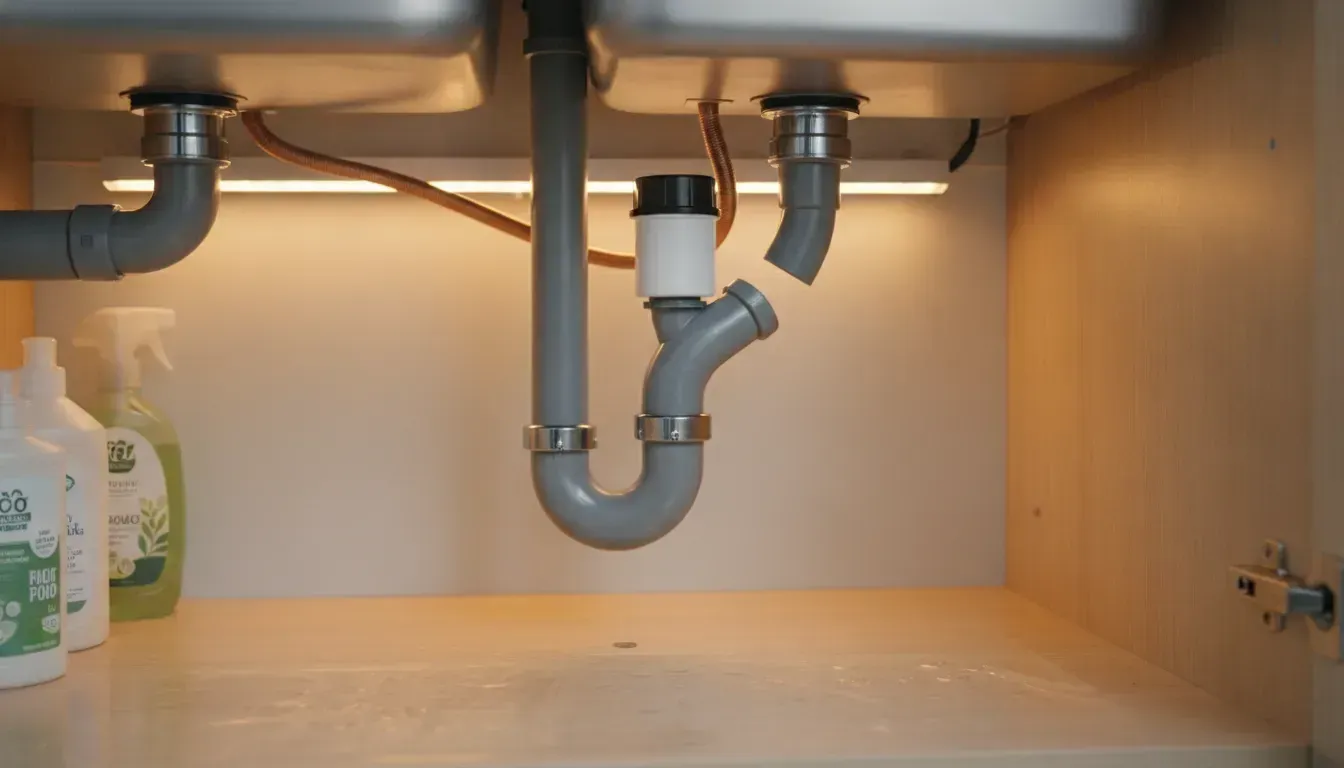
- Plan the valve location so it sits above the trap arm and at least 4 inches above the fixture drain's horizontal branch. Keep the valve accessible for inspection and service, and avoid placing it where stored items could block the air inlet. The final location must also meet the requirements enforced by your local Authority Having Jurisdiction.
Cut and dry-fit the pipe
- Measure the run from the trap to the valve adapter, then cut the pipe cleanly. Dry-fit the trap, fittings, adapter, and valve without solvent cement. Check that the assembly has the intended slope, that connections seat fully, and that the AAV will remain upright and accessible. For additional product-specific guidance, review the general installation steps for AAVs.
Cement the PVC or ABS joints
- After confirming the dry fit, disassemble the joints as needed and prepare the pipe and fittings according to the manufacturer's directions. Apply the appropriate primer and cement for the piping material, then assemble each PVC or ABS joint fully and squarely. Allow the connections to cure for the time specified by the cement manufacturer before testing.
Install and orient the AAV
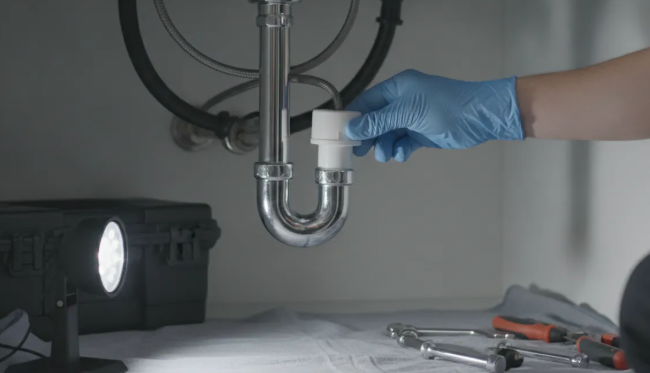
- Screw the AAV onto the adapter by hand, following the product instructions for the connection. Do not overtighten or use a method that could damage the valve body. Confirm that the arrow points upward. This orientation keeps the airflow path correctly aligned and allows the valve to operate as designed.
Test the completed system
- Run water through the island sink and inspect every joint for leaks. Listen for abnormal gurgling and confirm that the drain clears normally. During discharge, negative pressure can cause the AAV to open and admit air, helping maintain the trap seal. That action helps protect the trap from siphoning, sewer gases, and odors. Complete any required inspection or pressure testing before closing the cabinet or finishing the installation.

Tuuber products include a Limited Lifetime Warranty, providing additional support for the installed valve when used according to the applicable instructions and requirements.
Contact Tuuber Valves for product selection assistance or to discuss your island sink venting project.
Product Selection: Which Tuuber AAV Kit Works Best for Island Sinks
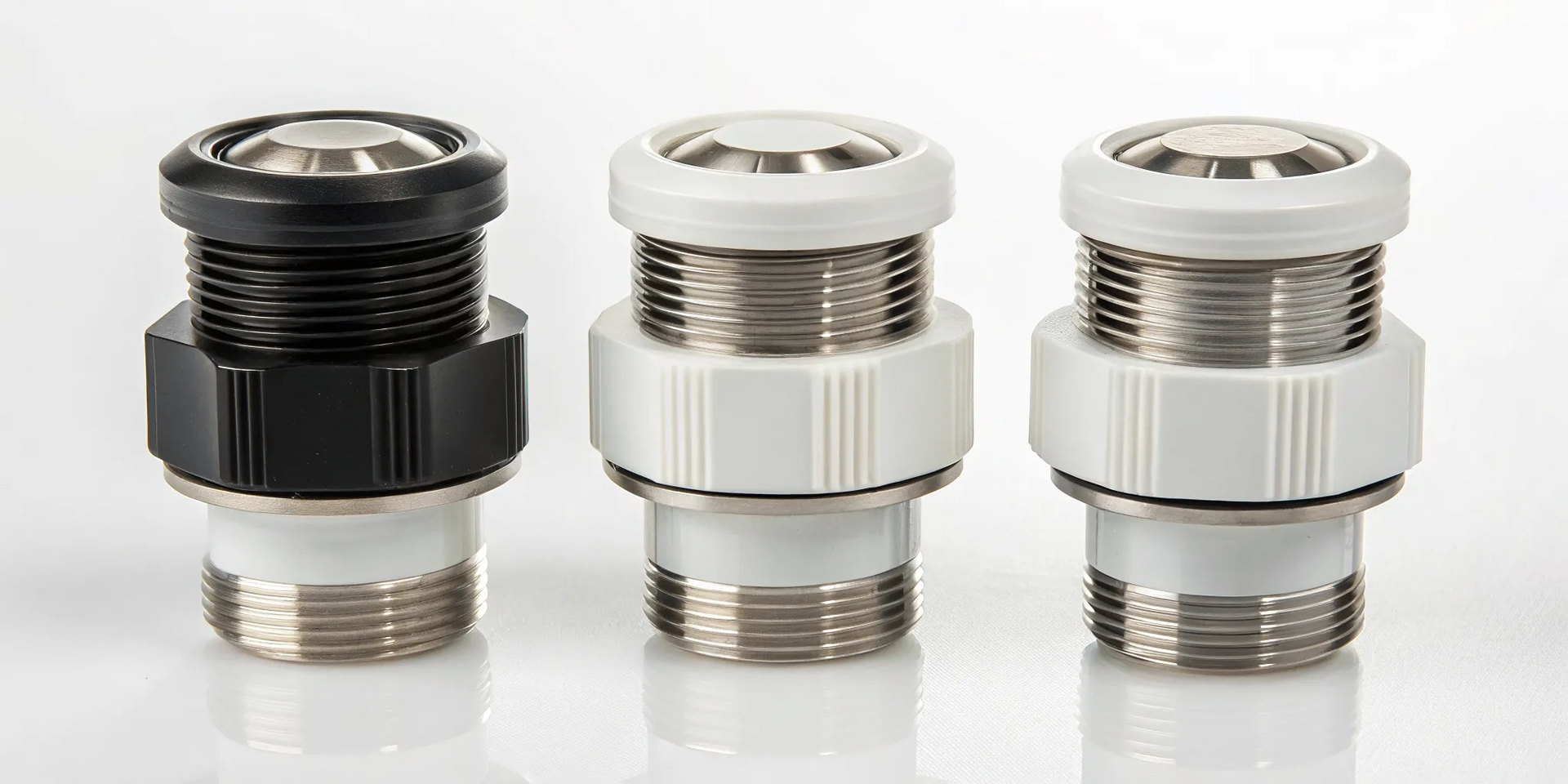
For most island sink installations, the Tuuber Dual-Seal 20 AAV, identified as model 174015. It is designed for applications where traditional wall venting is not feasible and uses patented dual-seal, triple-flow-passage technology. That combination gives installers a purpose-built option for placing an air admittance valve inside the sink cabinet while maintaining a reliable path for air movement in the drainage system.
Why dual-seal protection matters under an island sink
An island sink puts the vent assembly in a confined cabinet rather than in an open wall or attic space. If the trap loses its seal or the vent assembly allows sewer gas to escape, odors can become noticeable quickly in the kitchen. Tuuber AAVs are intended to help protect fixture traps from sewer gases, odors, and siphoning. The dual-seal design is especially relevant in this setting because it supports the goal of keeping the cabinet environment clean and free of unwanted drainage odors.
During drainage, negative pressure can develop in the system. An AAV opens to admit air and help maintain atmospheric pressure, reducing the risk that the trap seal will be siphoned out. Correct sizing, placement, and installation still matter, and the local Authority Having Jurisdiction determines which venting arrangement is permitted for a specific project.
Choose the configuration that matches the cabinet layout
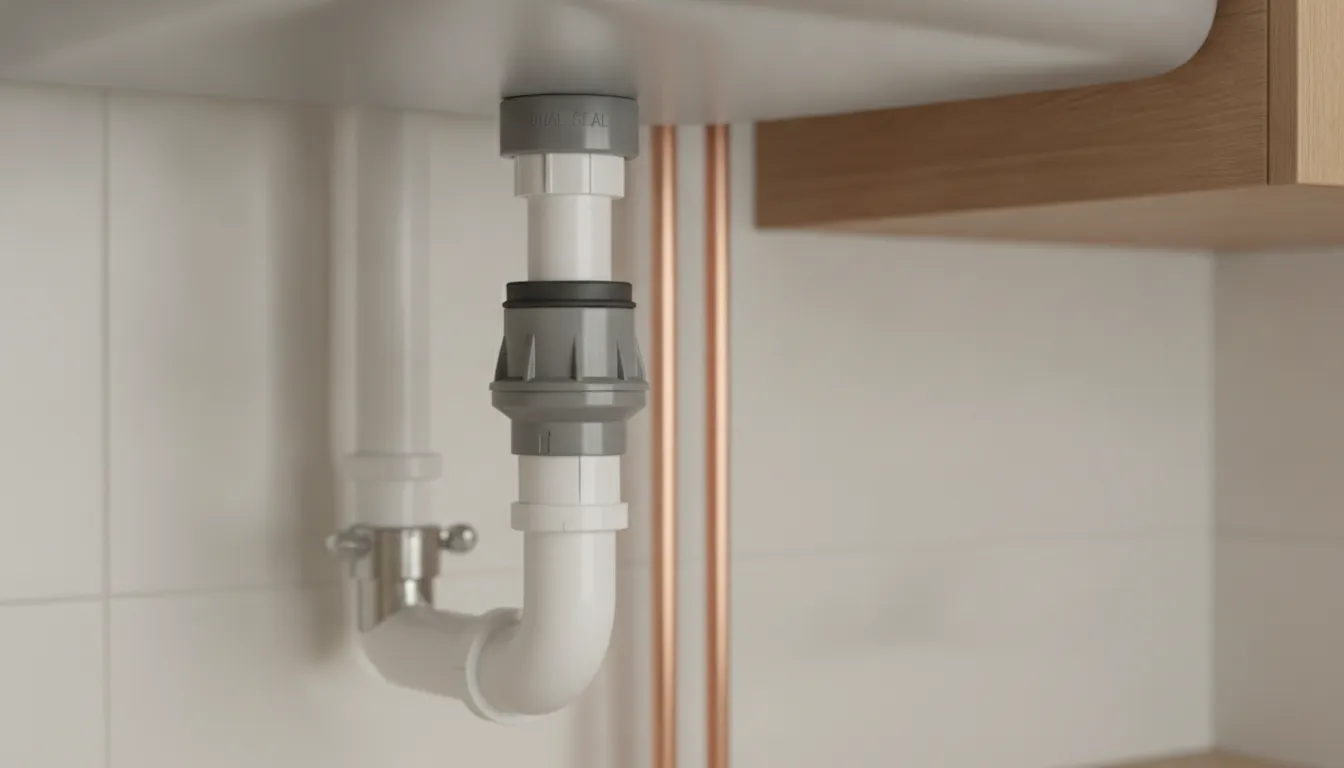
The standalone Dual-Seal 20 AAV can suit a straightforward island sink drain configuration. Where the sink, trap, and vent connection require more flexibility, consider a Tuuber flexible-coupling configuration. Pre-assembled trap assemblies can also simplify a project when the installer wants the trap and venting components organized as a coordinated assembly rather than sourced and fitted separately.
Before selecting a kit, confirm the available cabinet space, connection requirements, and applicable local rules. Review the Tuuber Dual-Seal 20 AAV product lineup for configuration options, then check the AAV technical specifications and compliance for product details. Tuuber products are designed to comply with ASSE 1050 and ASSE 1051, and all Tuuber Valve products include a Limited Lifetime Warranty. Those details help contractors and informed DIYers evaluate a solution based on both installation needs and long-term support. For more context on how island venting compares with other approaches, explore our complete AAV installation resource library.
Frequently Asked Questions
Can I use an air admittance valve on an island sink?
Often, yes, when local plumbing rules allow it and the valve is installed in an accessible location with adequate airflow. An AAV can provide a practical alternative when a wall vent cannot reach the island. Confirm the permitted method with your Authority Having Jurisdiction before closing the cabinet or floor assembly.
How does an air admittance valve work for an island sink?
An AAV is a one-way valve. When drainage creates negative pressure, the valve opens to admit air and maintain atmospheric pressure in the drain. This helps prevent the trap seal from being siphoned out. When the pressure equalizes, the valve closes to help keep sewer gases and odors out of the room. (Source: U.S. Environmental Protection Agency.)
What is the downside of an air admittance valve?
The main limitation is that an AAV is not automatically acceptable in every jurisdiction or every installation. It also needs to remain accessible for inspection or replacement, and it must be installed according to the product instructions. If local rules require a loop vent or another venting method, use that approved design instead of substituting an AAV.
How do you vent a sink that is in an island?
Plan the drain and trap assembly first, then choose an approved venting method. A loop vent can route upward within the island and return downward, while an AAV can admit air without routing a pipe to a wall. Keep the valve accessible, support the piping correctly, and test the finished system for proper drainage and watertight connections before use.
Ready to Choose Your Island Sink AAV?
The right air admittance valve setup can help you approach an island sink installation with a practical venting plan and the components suited to the configuration. Browse Tuuber's full selection of AAV products to compare available options and find the right kit for your island sink installation.